Want a report for your property? Get your own report
Get started — $9.99Sekira.ai
Property Report: Raleigh, NC 27609
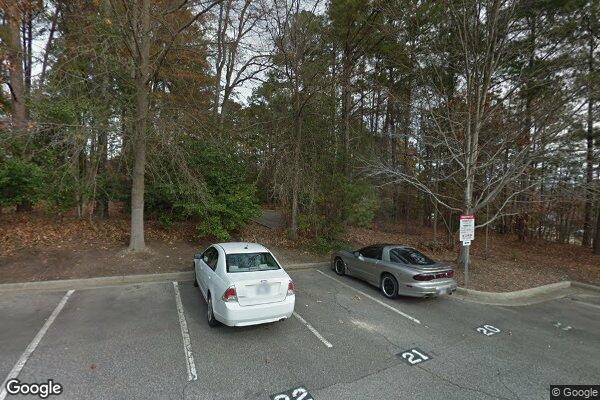
Street View
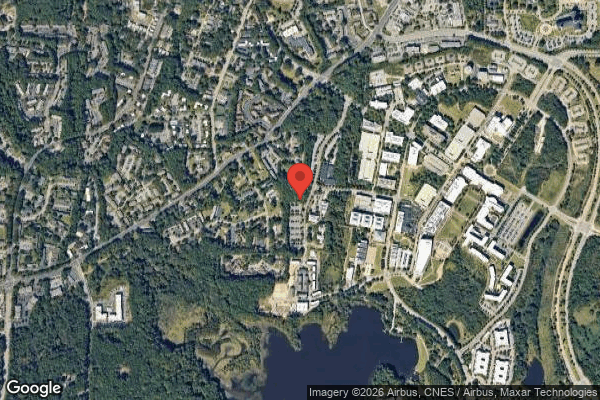
Satellite View
1180 Lake Raleigh Rd, Raleigh, NC 27606 is a residential property situated in the Southwest Raleigh neighborhood, positioned on the doorstep of NC State University's prestigious Centennial Campus and directly adjacent to Lake Raleigh. This uniquely positioned address benefits from one of Raleigh's most dynamic institutional environments: a 1,000-acre research campus that is actively expanding through a planned 30-acre mixed-use North Oval Innovation District and ongoing Lake Raleigh area improvements, creating sustained long-term demand for nearby real estate. From a valuation standpoint, the 27606 ZIP code has a typical home value around $427,000–$460,000, and the Southwest Raleigh micro-market has seen median prices rise approximately 11.5% year-over-year to approximately $380,000. The census tract's median home value of $465,500 signals premium pricing for this specific pocket. This is a buyer-friendly moment in the cycle: the broader Raleigh market has transitioned to balanced conditions, with homes spending 55–72 days on market and sellers offering concessions at a 45% higher rate than the national average, giving a motivated buyer meaningful negotiating leverage. Key strengths include proximity to Research Triangle Park (the largest research park in the US), NC State Centennial Campus, and the entire Research Triangle's booming tech and life sciences economy. Air quality is excellent (AQI 19), seismic risk is minimal (zero earthquakes in the past year), and the Southwest Raleigh area is consistently cited as the safest quadrant of the city. The tract's demographics skew young (median age 31) and highly educated, reflecting the campus-adjacent character. The primary considerations for a buyer are: (1) the extreme renter-dominance of the immediate tract (93.2% renters, typical of campus-adjacent areas), which limits owner-occupancy comps and may affect resale; (2) moderate radon risk (EPA Zone 2) requiring pre-purchase testing; (3) the single active EPA TRI facility in the ZIP; and (4) the current interest-rate environment, though forecasts project 30-year fixed rates easing toward 5.9% by late 2026, potentially restoring meaningful purchasing power. Long-term, the Research Triangle's robust job creation, sustained in-migration, and Centennial Campus expansion make this address a compelling buy for buyers with a 5–10 year horizon.
1180 Lake Raleigh Rd is located in Southwest Raleigh, Wake County, NC 27606, within the immediate orbit of NC State University's Centennial Campus — one of the premier university-affiliated research and innovation districts in North America. The address sits along Lake Raleigh Road, which borders the scenic Lake Raleigh recreation area on Centennial Campus, offering greenway access, a public fishing pier, disc golf, and proximity to the Lonnie Poole Golf Course. Specific structural details (beds, baths, sqft, year built, construction material, zoning) were not provided in the source data and could not be independently confirmed; all physical-attribute fields are null pending a title search or county assessor lookup via Wake County's Real Estate Search portal (services.wake.gov). Buyers should obtain a full property data sheet from Wake County and commission a professional home inspection before proceeding. The surrounding development context includes a mix of townhomes, condos, and single-family residences developed by White Oak Properties as part of the broader Lake Raleigh / Centennial Campus residential buildout, as well as the LakeShore Raleigh condo community on the north shore of the lake.
Type
Residential — Street Address
Estimated Value
$440,000
Range: $370,000 – $520,000
low confidenceEstimated value is derived from ZIP-code-level median values (27606 median ~$427,882–$459,900 per Zillow/Movoto), the census tract median home value ($465,500), and a review of comparable active and recently sold properties within 1 mile in 27606. Because specific property details (sqft, beds, baths, year built) were not available, a precise AVM could not be run. The confidence level is LOW and the range is wide ($370K–$520K) to reflect this uncertainty. Buyers must obtain a full county assessor record and commission an appraisal. Price per sqft is null due to missing sqft data.
Comparable Sales
648 S Lakeside Dr, Raleigh, NC 27606
$485,000
1316 Onslow Rd, Raleigh, NC 27606
$725,000
1130 Schaub Dr APT F, Raleigh, NC 27606
$185,000
6111 Sunpointe Dr APT 101, Raleigh, NC 27606
$249,000
601 Democracy St, Raleigh, NC 27603
$440,000
Southwest Raleigh — Centennial Campus / Lake Raleigh Area
Southwest Raleigh is consistently rated the safest quadrant of Raleigh and is dominated by the institutional presence of NC State University's Centennial Campus. The immediate Lake Raleigh sub-area offers a rare lakeside, greenway-connected lifestyle within minutes of downtown Raleigh and Research Triangle Park. The census tract (FIPS 37183052305) skews extremely young (median age 31) and overwhelmingly renter-occupied (93.2%), reflecting the campus-adjacent, graduate-student and young-professional character of the neighborhood. Named highlights within 500m include Social Fabric café, Avent Ferry United Methodist Church, and the Tammy Lynn Center. The area has excellent bicycle infrastructure (14 bicycle parking facilities within 500m), though transit stops are currently absent within the immediate 500m radius — a potential friction point for car-free residents. Centennial Campus itself offers walking trails, a public fishing pier, disc golf, the Lonnie Poole Golf Course (public), and the Hunt Library. A new Centennial Campus Placemaking initiative (launched August 2024) is actively working to enhance the Lake Raleigh area as a community destination, including a planned loop trail around the lake.
Median Income
$63,664
Population
1,907
Median Age
31
Nearby Amenities
Wake County Public School System — Rating: 8/10
The Wake County Public School System is the largest in North Carolina and ranks highly among Raleigh-area districts. Public schools in Raleigh average a 7/10 GreatSchools rating, above the state average. Notably, Centennial Campus Magnet Middle School is within walking distance (~0.7 miles) of the property — a significant advantage for families. Raleigh Charter High School, rated 10/10 on GreatSchools and ranked 3rd best public high school in NC by Niche (2026), is accessible within the district. Private options in 27606 include Grace Christian School and Atlas International School. Note: specific school assignments must be confirmed with Wake County Schools, as magnet programs may require applications.
Olds Elementary School
Centennial Campus Magnet Middle School
Athens Drive Magnet High School
Raleigh Charter High School
Grace Christian School
Southwest Raleigh — where this property is located — is consistently rated the safest part of the city. According to CrimeGrade.org data, crime rates in southwest neighborhoods run as low as 1 in 64 (i.e., a 1.56% victimization rate), compared to 1 in 23 in central Raleigh. The Raleigh Police Department's 2025 annual report shows overall crime trending downward: total property crime fell 17%, vehicles stolen dropped from 946 to 793, and aggravated assaults decreased year-over-year. Violent crime edged down 1% city-wide. Raleigh overall ranks in the 48th–59th percentile for safety among US cities (various sources), meaning it is near average nationally — but the southwest quadrant significantly outperforms the city average. The sex offender data field is null because this property is outside Washington DC (the DC registry API was the only sex offender source available). Buyers should check the NC Sex Offender Registry independently. Crime data reflects city-level FBI UCR reporting; neighborhood-level granularity may differ.
Overall Risk: low
The overall climate risk profile for this property is LOW. Flood history in the ZIP shows declining activity, wildfire risk is minimal, earthquakes are essentially absent, and air quality is excellent. The primary concerns are moderate heat (typical for the Southeast), moderate radon risk (Zone 2 — testing required), and the general North Carolina exposure to winter storms and occasional tropical remnants. No special insurance products beyond standard homeowner's coverage are anticipated to be required, pending FEMA flood zone confirmation.
The 27606 ZIP code has 99 total NFIP flood insurance claims since 1984, with only 9 in the last 5 years (latest claim 2021), suggesting historical flood activity has declined. The majority of historic claims were in AE and A flood zones. River discharge at the property coordinates is very low (max 2.37 m³/s over the 7-day forecast), indicating minimal near-term flood risk. Buyers should confirm the specific parcel's FEMA flood zone designation via FEMA's Flood Map Service Center before purchase.
NASA FIRMS detected 24 thermal anomalies within 50km over the past 5 days, but all are at nominal confidence (none high-confidence) and the nearest detections are several miles away. No active wildfire threat near the property. The urban/suburban setting of Raleigh and Centennial Campus provides effective fire breaks.
North Carolina has experienced winter storms as its primary FEMA disaster type over the past decade (50 declarations, all Winter Storm). The area sees occasional strong wind events associated with nor'easters and tropical remnants, but is not in a coastal hurricane-direct-impact zone. Current wind speeds are mild (6.2 km/h). Standard homeowner's insurance should be adequate.
Raleigh experiences hot, humid summers with temperatures regularly reaching the upper 30s°C (95°F+). The 7-day forecast shows a moderate range (max ~21°C in mid-March). Long-term climate trends point to increasing heat days in the Southeast US. Adequate HVAC and insulation are important for comfort and energy costs.
Air quality is excellent. The nearest WAQI monitoring station (Millbrook NCore) reports an AQI of 19 (Good), with PM2.5 as the dominant pollutant at a sub-index of 19. Open-Meteo confirms PM2.5 at 6.3 µg/m³ and US AQI of 22. The sole active EPA TRI facility in the ZIP code (Surtronics Inc., electroplating, 4001 Beryl Rd) is approximately 1.5 miles north of the property; buyers may wish to review its most recent TRI release data at EPA's website.
Zero earthquakes of magnitude 2.5+ were recorded within 50km over the past 365 days (USGS data). North Carolina is not on a major fault system, and Wake County seismic risk is negligible. No earthquake insurance is typically warranted.
North Carolina can experience periodic drought, particularly in summer. The Raleigh area's climate generally receives adequate annual precipitation (~45 inches/year), but dry spells may affect landscaping and water bills during summer months.
Insurance Considerations
Standard homeowner's insurance is expected to be obtainable at normal rates given the low wildfire, flood, and seismic risk profile. Flood insurance is likely not required if the parcel is in FEMA Zone X (the most common designation in this part of Raleigh), but buyers must verify the parcel-specific FEMA designation. Wind/hail coverage is advisable given North Carolina's occasional severe storm exposure. Radon mitigation should be budgeted for if testing reveals elevated levels.
The Southwest Raleigh / 27606 market is currently balanced, transitioning away from the extreme seller's market of 2021–2022. The ZIP-code median is approximately $427,882–$459,900 (Zillow/Movoto, late 2025), with the Southwest Raleigh sub-market showing a median of ~$380,000. Homes are spending 67–91 days on market, significantly more than the 40 days of a year ago. With a 4.4-month supply of inventory and a 98% list-to-sale ratio, sellers are still achieving close to asking price on average, but 32% of listings are seeing price reductions — a meaningful concession environment. The Raleigh-Durham market area has experienced post-pandemic softening: after a 30.1% surge in 2021, values have seen modest YoY declines of 1–2.3% in 2023–2025. However, multiple forecasters (NAR, Zillow, Houzeo) project a rebound in 2026, with 2–4% appreciation. Long-term fundamentals — driven by tech and life sciences job growth, sustained in-migration, and NC State Centennial Campus expansion — remain strongly supportive of property values in this specific micro-market.
Median Price
$459,900
1-Year Change
+0.5%
5-Year Change
+35.0%
Median Days on Market
67
Months of Supply
4.4
Market Type
balancedForecast
Home prices in Raleigh forecast to appreciate 2–4% in 2026 per NAR/local analyst consensus. Wake County specifically projected at 3–5% appreciation alongside higher inventory. Mortgage rates expected to ease toward 5.9% by late 2026 (Fannie Mae forecast), which could restore $20,000–$25,000 in purchasing power for typical buyers and catalyze renewed demand.
This property sits at the intersection of a high-demand institutional micro-market (NC State Centennial Campus) and a broader Raleigh market that has entered a buyer-favorable correction phase. The campus-adjacent rental market is structurally robust — graduate students, post-docs, researchers, and tech workers at Centennial Campus partners (IBM, Hitachi Energy, LexisNexis, etc.) provide a deep tenant base. Estimated monthly rent of $1,800 is based on the tract's median gross rent of $1,322 (census) adjusted for proximity premium and market rents for comparable units in the 27606 ZIP; actual rent depends heavily on unit size and condition, which are unknown. The gross rental yield of ~4.9% and cap rate of ~3.2% (after estimated operating expenses of $1,400/month including taxes, insurance, maintenance, and vacancy reserve) are reasonable for this market. Cash-on-cash return is null without specific financing terms. Buyers seeking a long-term hold of 7–10+ years should benefit from the secular demand growth driven by Centennial Campus expansion and Research Triangle job growth. Short-term speculators face headwinds from the current softening cycle and high renter-to-owner ratio.
Est. Monthly Rent
$1,800
Gross Rental Yield
4.9%
Cap Rate
3.2%
Net Operating Income
$10,968
Vacancy Rate
8.0%
Pros
- + Immediate adjacency to NC State Centennial Campus creates structural demand from faculty, researchers, and graduate students — a deeply reliable tenant pool
- + Southwest Raleigh is consistently the safest part of the city, supporting renter and owner demand alike
- + Research Triangle Park (~15 miles) and downtown Raleigh (~5 min drive) provide multiple employer anchors supporting long-term demand
- + The planned North Oval Innovation District (30-acre mixed-use development on Centennial Campus) is a long-term demand catalyst for nearby residential properties
- + Raleigh's 2026 market conditions (more inventory, seller concessions, balanced pricing) represent the best buyer entry conditions since 2020
- + Low climate risk profile: excellent air quality, minimal earthquake/wildfire risk, and modest flood history
- + Strong internet connectivity (92.3% broadband penetration in the tract) supports remote-work residents
- + NC's 2.5% corporate tax rate — the lowest in the US — continues to attract major employers to the Research Triangle, underpinning long-term housing demand
Cons
- - Extremely high renter-occupancy rate in the census tract (93.2%) means comparables for owner-occupied resale are limited and may compress exit values
- - Specific property details (beds, baths, sqft, year built) are unknown, making precise valuation, rental income projection, and total cost of ownership modeling impossible without further data
- - Moderate radon risk (EPA Zone 2) — mitigation costs should be budgeted
- - Single active TRI facility (Surtronics Inc., electroplating) in the ZIP warrants a review of emissions data before purchase
- - The multifamily market in Raleigh-Durham faces excess supply from post-pandemic construction; landlords are offering concessions at 45% above the national rate, which could create rental income headwinds in the near term
- - Transit access is limited (zero bus stops within 500m), making the property car-dependent, which could limit the appeal to some renter and buyer segments
- - Raleigh home values declined modestly in 2023–2025 following the pandemic surge, and recovery is projected to be gradual (1.4–4% annually) rather than rapid
The Research Triangle: Why This Location's Economic Backbone Matters for Your Purchase
Purchasing near Lake Raleigh Rd means buying into one of the most economically dynamic metro areas in the United States. The Research Triangle — anchored by Raleigh, Durham, and Chapel Hill, with NC State, Duke, and UNC at its core — is not just a regional powerhouse but a nationally significant innovation hub.
Tech & Life Sciences Job Growth
- The Raleigh-Durham tech talent workforce has expanded to 76,570 workers, representing 15.4% growth from 2021 to 2024 — an increase of more than 10,000 professionals, according to CBRE data.
- Tech professionals in the region earn an average annual wage of $122,435, making the Triangle one of the most competitively compensated yet cost-effective tech markets in North America.
- Research Triangle Park (RTP), just ~15 miles from this property, spans 7,000 acres and is the largest research park in the United States, with over 300 companies generating $6+ billion in annual research activity.
- Major employer commitments include: Apple's $1B campus (3,000+ jobs), Google's $1B engineering hub (1,000+ positions), and Microsoft's software development center (2,500+ workers).
- The Triangle is the 5th largest life sciences hub in the US, with 600+ life science companies and 42,000+ employees earning an average of $140,000 annually.
Education Pipeline & Talent Production
- Three Tier-1 research universities generate approximately 65,000 bachelor's degrees annually, feeding directly into the regional employer base.
- NC State alone hosts the 10th-largest school of engineering in the nation — a direct talent pipeline for Centennial Campus partners.
- The Triangle attracts nearly $3 billion annually in R&D funding, spawning hundreds of startup businesses.
Rankings & Recognition (2025–2026)
- Raleigh has been ranked the #2 best state capital to live in (WalletHub, 2026).
- Raleigh ranked #1 city for college graduates for the second consecutive year (ADP Research), with a hiring rate of 4.2% — the highest among 55 major US cities analyzed.
- The Triangle is the only major tech hub in the US with a cost of living below the national average (regional cost of living index: 95.4).
- Raleigh was designated a five-star market for consumer momentum in 2026 by Placer.ai, citing job growth, in-migration, and a diversified economy.
Why This Matters for Your Purchase
A robust, diversified job market is the single most important long-term driver of residential real estate values. The Research Triangle's multi-sector economy (tech, life sciences, government, education, healthcare) provides insulation against single-industry downturns that have plagued other tech-concentrated markets. Buyers at 1180 Lake Raleigh Rd are not just buying a home — they're buying into a structural demand engine that has consistently outperformed national housing trends over the past two decades.
| Metric | Value | Source |
|---|---|---|
| Raleigh Metro Population (2025) | 1,661,000 | MacroTrends |
| Population Growth (2020–2024) | + 33,000 (city); +2% metro/yr | NC OSBM / MacroTrends |
| Tech Workforce (Raleigh-Durham) | 76,570 | CBRE, 2024 |
| Tech Workforce Growth (2021–2024) | + 15.4% (10,000+ workers) | CBRE |
| Avg Tech Salary | $122,435/yr | Wake County Economic Dev. |
| Life Sciences Companies | 600+ | Work in the Triangle |
| Life Sciences Avg Salary | $140,000/yr | Work in the Triangle |
| Annual R&D Funding Attracted | ~$3 billion | Research Triangle Regional Partnership |
| Annual Degrees Awarded (Triangle) | 65,000 bachelor's | Research Triangle Regional Partnership |
| Cost of Living Index | 95.4 (below national avg) | Work in the Triangle |
Raleigh's Demographic Momentum: A Buyer's Structural Tailwind
Population Milestones
- Raleigh surpassed 500,000 residents in 2024, growing by 33,000 people between April 2020 and July 2024 — adding more residents than any NC municipality except Charlotte.
- The Raleigh metro area reached 1,661,000 people in 2025, growing at approximately 2% per year.
- North Carolina as a whole grew 1.3% to 11.2 million as of July 2025 — the 3rd fastest-growing state in the US (Census Bureau, Jan 2026).
Migration Patterns
- In-migration to the Raleigh metro area totaled 118,019 people in one measured year, of whom 31% were international migrants — reflecting global appeal, not just domestic relocation.
- Growth is primarily driven by domestic migration due to North Carolina's competitive economic appeal, according to state demographers.
- The Raleigh-Cary metro's share of college-educated adults grew approximately 4 percentage points, tracking with regional workforce development programs.
The Campus-Adjacent Demographic
- The subject property's census tract (FIPS 37183052305) has a median age of 31 — among the youngest in Raleigh — reflecting the concentration of students, post-docs, researchers, and young tech professionals drawn to Centennial Campus.
- With 93.2% renter-occupied units, this tract functions as a high-liquidity rental market, providing strong tenant demand for any investor-buyer.
- The tract's median household income of $63,664 is above the NC state average of $61,072, suggesting a tenant base with meaningful earning power.
Long-Term Population Projections
- The Raleigh-Durham-Rocky Mount market (current population ~3.09M) is projected to grow 5.2% to 3.26M by 2030 (PopStats/STI).
- North Carolina is projected to surpass Georgia and Ohio to become the 7th most populated state by the early 2030s.
- Strong bipartisan political support for education and workforce development programs is expected to sustain talent attraction.
Implication for Property Values
Every 1% of population growth in a supply-constrained market tends to put upward pressure on both rents and home values. Raleigh's multi-decade trajectory of 2%+ annual metro growth, combined with the institutional anchor of NC State and the Research Triangle's employer base, creates one of the most defensible long-term demand backdrops among mid-sized US cities. For a buyer with a 7–10 year horizon, the demographic tailwinds are among the strongest in the nation.
| Geography | Population (2025 est.) | Annual Growth Rate | Key Driver |
|---|---|---|---|
| City of Raleigh | 500,000+ | ~1.5% | Job growth, migration |
| Raleigh Metro (MSA) | 1,661,000 | ~2% | Tech/life sciences expansion |
| Raleigh-Durham-RMt Market | 3,094,581 | ~1.7% | Triangle universities + RTP |
| North Carolina (State) | 11.2 million | 1.3% | Domestic migration (3rd in US |
| Projected NC State Pop. 2030 | ~11.7 million | ~1.0%/yr | Continued economic appeal |
Centennial Campus: A Unique Value Driver for 1180 Lake Raleigh Rd
What Is Centennial Campus?
This property sits directly adjacent to NC State University's Centennial Campus — named 'Outstanding Research Park' in 2007 by the Association of University Research Parks and recognized globally for its public-private partnership model. The ~1,000-acre campus is already home to approximately 75 corporate, government, and nonprofit organizations including IBM, LexisNexis, Hitachi Energy, ABB, Bandwidth, and the US Department of Agriculture's regional office. Approximately 3,400 students attend classes there annually.
Why This Property Benefits
- Proximity to employment: The campus directly employs researchers, engineers, and administrative staff who need nearby housing. This property is arguably the closest non-campus residential address to Centennial Campus's core.
- Amenities: Lake Raleigh fishing pier, greenway, disc golf, Lonnie Poole Golf Course (public, par-71), and the James B. Hunt Jr. Library are all within walking distance.
- Planned Loop Trail: As of January 2025, NC State's Centennial Campus Placemaking initiative is working to complete a loop trail around Lake Raleigh, enhancing recreational value and public connectivity.
- Greenway modification project: A project is currently underway to modify the greenway along the north shore of Lake Raleigh, further improving the public amenity offering.
The North Oval Innovation District: A Catalyst
Perhaps the most significant development for long-term property values is the planned 30-acre, mixed-use North Oval Innovation District on Centennial Campus, developed by Lincoln Harris:
- Designed as an urban learn/live/work/play environment
- Permits filed with the City of Raleigh for roadways, sidewalks, and pedestrian-focused site amenities
- Creates a 'critical mass of activity' that will strengthen NC State's role as an educational and economic engine
- The CMP zoning (approved by the City of Raleigh) enables future towers up to 28 stories, dramatically increasing density and foot traffic near this property
Tenant Quality
For investor-buyers: Centennial Campus's ground-lease residential model (townhomes, condos, apartments) has demonstrated sustained demand from a high-quality tenant cohort — researchers, engineers, and graduate students with stable incomes and long tenancy preferences. Comparable development (LakeShore Raleigh condos by White Oak Properties, 44 units) sold units ranging from $199,999 (studio) to $419,900 (3BR) at launch, indicating strong demand across price points.
Key Risk to Monitor
The Campus Master Plan zoning allows significant future development, including tall structures. Buyers should review the CMP zoning map to understand where new buildings may be sited relative to this property, as construction activity could affect views, noise, and traffic in the medium term.
Negotiation Intelligence for 1180 Lake Raleigh Rd
Current Market Leverage Points
The current Raleigh market is the most buyer-favorable since 2020. Here's how to exploit it:
1. Time on Market Is Your Friend
- Southwest Raleigh homes averaged 91 days on market in January 2025 (Rocket Homes), with 50% of homes taking more than 90 days to sell.
- This is a dramatic slowdown from the 24-hour offer windows of 2021–2022.
- The longer a property has been listed, the more motivated the seller — ask your agent for the days-on-market figure and use it in your opening bid.
2. Seller Concessions Are Now Normal
- Raleigh's concession rate is 45% above the national rate, with more than half of Raleigh landlords and sellers offering concessions.
- Common concessions in today's Triangle market include: seller-funded closing credits, rate buydowns, home warranties, and repair credits.
- Request a seller-paid rate buydown (2-1 buydown) — this could save $200–$400/month in your first two years.
3. Price Reduction Leverage
- 32.2% of Raleigh listings have had price reductions — nearly one in three.
- If the property has had any price drops, use the reduction history as an anchor to negotiate further below the current ask.
- The list-to-sale ratio is 98% city-wide, but Southwest Raleigh's slower market suggests you may achieve 95–97% of ask with a confident offer.
4. Pre-Inspection Offer Structure
- Commission a pre-offer inspection (cost: ~$400–$600) to identify defects early and use findings as negotiating leverage — specifically for radon testing (Zone 2 county) and any structural or mechanical issues in an older structure.
- Make radon testing and mitigation (if needed) a condition of sale or negotiate a credit.
5. Mortgage Rate Timing
- Rates are forecast to ease toward 5.9% by late 2026 (Fannie Mae). If rates drop significantly after purchase, budget for a refinance — this is the 'buy now, refi later' window.
- Get pre-approved before making an offer; a Same-As-Cash pre-approval dramatically strengthens your position even in a buyer's market.
6. What to Watch For
- Verify the parcel's FEMA flood zone designation — if Zone AE, flood insurance will be required and adds cost.
- Confirm school assignments with Wake County (magnet school lottery may be required).
- Review Centennial Campus's CMP zoning map to assess future development adjacency risks.
- Pull the Wake County tax record to verify assessed value vs. asking price.
| Negotiation Lever | Current Data Point | Buyer Action |
|---|---|---|
| Days on Market | 67–91 days (SW Raleigh) | Open below ask; seller is motivated |
| Price Reductions | 32.2% of Raleigh listings reduced | Use reduction history as anchor |
| Concession Rate | 45% above national average | Request closing cost credit or rate buydown |
| List-to-Sale Ratio | 98% (city); lower in SW Raleigh | Target 95–97% of ask |
| Radon Zone | EPA Zone 2 (Moderate) | Require radon test as sale condition |
| Inventory | 4.4 months supply | No urgency; take time for due diligence |
Solar Potential at 1180 Lake Raleigh Rd
The property's solar resource is solid for the southeastern US. NREL data (the authoritative US solar resource source) reports:
Key Metrics (NREL)
- Global Horizontal Irradiance (GHI): 4.46 kWh/m²/day annual average — a good baseline for rooftop solar viability.
- Tilt-at-Latitude Irradiance: 5.14 kWh/m²/day — the best estimate for a fixed south-facing rooftop system, confirming strong productivity.
- Peak Months: May–July (GHI: 6.07–6.27 kWh/m²/day)
- Lowest Month: December (GHI: 2.34 kWh/m²/day)
Estimated Production (PVGIS, 1 kWp system)
- Annual output: ~1,236 kWh/year per 1 kWp installed
- A typical 6 kWp residential system would produce approximately 7,400 kWh/year
- North Carolina average electricity consumption: ~13,000 kWh/year → a 6–8 kWp system could offset 55–75% of electricity bills
North Carolina Solar Incentives
- Federal Investment Tax Credit (ITC): 30% of system cost
- NC does not currently offer a state solar tax credit, but net metering policies allow grid export credits
- Duke Energy Progress (serving Raleigh) offers net metering — excess solar energy is credited against future bills
Practical Note
Solar feasibility depends heavily on roof age, orientation, shading from trees (Centennial Campus has significant tree canopy), and HOA/condo rules if applicable. A solar site assessment is recommended as part of the due diligence process. Given the high renter-occupancy in the immediate area, confirm whether the specific unit type allows rooftop solar installation.
| Month | Daily Irradiance (GHI, kWh/m²) | Est. Monthly Output (1kWp) |
|---|---|---|
| January | 2.60 | 63.9 kWh |
| February | 3.41 | 74.4 kWh |
| March | 4.47 | 109.3 kWh |
| April | 5.49 | 132.4 kWh |
| May | 6.16 | 140.1 kWh |
| June | 6.27 | 140.9 kWh |
| July | 6.07 | 141.1 kWh |
| August | 5.58 | 125.3 kWh |
| September | 4.54 | 102.6 kWh |
| October | 3.67 | 86.8 kWh |
| November | 2.81 | 66.5 kWh |
| December | 2.34 | 53.3 kWh |
Like what you see?
Get a personalized property intelligence report for any address.
Get your own reportCompare with other cities
Get Your Own Property Report
Comprehensive AI-powered due diligence for any property in the US. Valuation, safety, schools, climate risk, market trends, and more.