Want a report for your property? Get your own report
Get started — $9.99Sekira.ai
Property Report: Scottsdale, AZ 85251
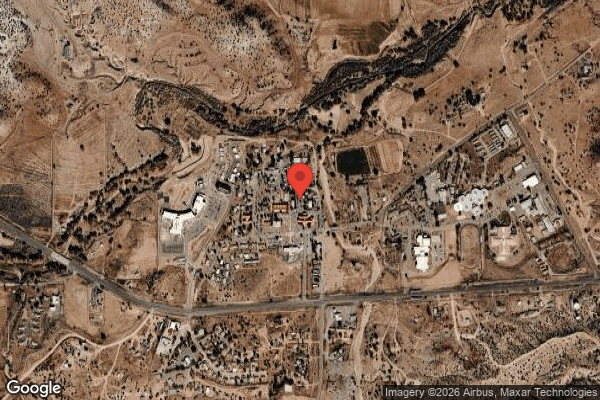
Satellite View
Elm Street in Ganado, AZ 86505 sits within the Navajo Nation in Apache County, northeastern Arizona — one of the most unique and legally complex real estate environments in the United States. This is not a conventional property transaction: Ganado is a chapter of the Navajo Nation, and land within its boundaries is predominantly tribal trust land held by the federal government on behalf of the Navajo people. Rather than purchasing fee-simple title, prospective buyers must navigate a system of homesite leases (HSLs) administered by the Navajo Land Department — typically 75-year renewable leases — rather than outright ownership. This fundamental distinction must be understood before any purchase decision is made. From a community standpoint, Ganado is described as "one of the most advanced communities in the Navajo Nation," hosting the nationally recognized Sage Memorial Hospital (recently named Arizona's 2025 Community Star), the College of Ganado, satellite campuses for Northern Arizona University and Diné College, and the historic Hubbell Trading Post National Historic Site. The area carries deep cultural significance and a close-knit community identity rooted in Diné heritage. Economically, the census tract reflects the challenges common to reservation communities: a tract-level median household income of approximately $26,699 — far below the Arizona state median of $62,663 — and a median home value of approximately $40,900. The rental market is extremely thin, with only 16.7% of occupied units being renter-occupied. Internet connectivity is significantly below average, with 45.1% of households having no internet access. These factors limit both the resale market and rental investment potential. For a buyer evaluating this purchase, the critical questions are: (1) What type of land tenure applies to this specific parcel — tribal trust, allotment, or private fee land? (2) Is the prospective buyer a Navajo Nation member (most leases require tribal membership or family connection)? (3) What is the intended use — primary residence, community service, or other? Due diligence must begin with the Navajo Land Department and an attorney experienced in Indian land law before any other steps are taken. The property's value and marketability are highly dependent on the answers to these questions.
The geocoded address resolves to Elm Street, a road corridor in Ganado, AZ 86505 — rather than a specific numbered parcel. No specific property data (bedrooms, bathrooms, square footage, year built, or assessed value) is available for this street-level address. Ganado is a chapter of the Navajo Nation located in Apache County in northeastern Arizona, situated at approximately 6,395 feet (1,949 m) elevation on the Colorado Plateau. Homes in the area are typically modest single-family structures, many built through tribal housing programs. The community sits near the intersection of US Highway 191 and State Route 264. The immediate vicinity of Elm Street includes the College of Ganado, Sage Memorial Hospital (a newly renovated facility), and the Ganado Post Office — all within 500 meters. Property tax assessment on Navajo Nation land is complex: tribal trust land is generally exempt from state and county property taxes, while fee-simple private parcels may be subject to Apache County assessments. Buyers should verify land status with both the Navajo Land Department and Apache County Assessor.
Type
Single-family residential (assumed)
Estimated Value
$45,000
Range: $20,000 – $80,000
low confidenceValuation is based primarily on Census Bureau ACS tract-level median home value data (Census Tract 9449.01, Apache County), which reports a median home value of $40,900. No MLS comparable sales data is available for Ganado — the community is largely outside traditional MLS coverage due to its location on the Navajo Nation, where most properties are not sold via conventional real estate channels. The value range ($20,000–$80,000) reflects the wide disparity between modestly-built tribal housing program homes at the low end and more recently constructed or privately-owned properties at the high end. Buyers should obtain a licensed appraisal from a professional experienced with Navajo Nation properties. Arizona state-wide median home value is approximately $243,360 (ACS) or $444,500–$455,000 (market data), illustrating how significantly Ganado diverges from statewide norms.
Ganado Chapter, Navajo Nation
Ganado is a chapter (community unit) of the Navajo Nation in Apache County, northeastern Arizona. Situated on the vast Colorado Plateau at approximately 6,395 feet elevation, the community is surrounded by high desert terrain, red rock mesas, and open rangeland. It is widely regarded as one of the most developed and resource-rich communities within the Navajo Nation, hosting a modern hospital, higher education facilities, a post office, and the historic Hubbell Trading Post National Historic Site (operating since 1878). The community maintains strong Diné cultural traditions while offering more amenities than most Navajo Nation chapters. The Navajo Nation observes Daylight Saving Time, unlike the rest of Arizona, which is an important logistical note for residents. The census tract (FIPS 04001944901) has a population of 3,556 with a young median age of 29. Owner-occupancy is high at 83.3%, reflecting the dominant pattern of families holding long-term homesite leases rather than renting. The area faces significant economic challenges: tract-level median household income is $26,699 — well below the Arizona average of $62,663 — reflecting the persistent economic disparities of reservation communities. Internet access is limited, with 45.1% of households having no internet subscription, and cable/fiber/DSL reaching only 34.9% of households — considerably behind the Arizona average.
Median Income
$26,699
Population
3,556
Median Age
29
Nearby Amenities
Ganado Unified School District
The Ganado Unified School District (GUSD) serves students from Pre-K through 12th grade across four campuses, all within the Navajo Nation in Apache County. The district is deeply rooted in Diné culture, integrating Navajo language and cultural values throughout its curriculum. Ganado Middle School received a 'B' rating under the Arizona Department of Education's accountability system for 2024, reflecting meaningful academic improvement. Notably, GUSD is the only K-12 district on the Navajo Nation offering Project Lead The Way (PLTW), a nationally recognized STEM program. The district also participates in the SARSEF science and engineering competition, providing students with access to STEM scholarships and experiences. One persistent challenge is teacher retention — as of 2022 data, many teacher positions are filled by non-residents on short-term assignments, limiting the continuity of student-teacher relationships. The district receives federal Indian Education funding (Title VI) and participates in the Navajo Nation Johnson O'Malley Program to support culturally relevant programming. Regarding the user's specific interest in Scottsdale Unified private and charter schools: Scottsdale Unified School District (SUSD) and its associated private/charter schools are located approximately 200+ miles southwest of Ganado near Phoenix. Families in Ganado would not typically have access to these schools without relocating. A dedicated custom section below addresses top Scottsdale-area private and charter schools for buyers who may be considering a relocation comparison or have connections to the Phoenix metro area.
Ganado Primary School
Ganado Intermediate School
Ganado Middle School
Ganado High School
Granular crime data for Ganado specifically is not available through standard FBI UCR reporting, as the Navajo Nation maintains its own law enforcement through the Navajo Nation Police Department, which operates under federal and tribal jurisdiction rather than standard state reporting systems. Arizona state-level FBI data shows violent crime at approximately 26–428 per 100,000 (varying by year in the UCR dataset provided) and property crime at 88–2,141 per 100,000, but these figures are statewide averages that do not reflect Ganado's conditions. The Navajo Nation Police Department serves the community; law enforcement response times in remote reservation communities can be significantly longer than urban areas due to geographic distances. Buyers should contact the Navajo Nation Police Department's Chinle Agency (which covers the Ganado area) for local crime statistics. Additionally, the Navajo Nation has historically faced challenges related to missing and murdered Indigenous women (MMIW) and substance abuse issues common to economically distressed reservation communities, though community organizations and tribal government have been actively working to address these challenges.
Overall Risk: moderate
Ganado faces a moderate overall climate risk profile, dominated by regional drought, wildfire seasonality in Apache County, and moderate radon risk from the region's geology. The property's high elevation (~6,395 ft) is a mitigating factor for heat. Zero NFIP flood claims and no active fire detections are positive indicators. The most critical climate due diligence items for a buyer are: (1) confirming water service availability given endemic drought conditions on the Navajo Nation, (2) obtaining radon testing, and (3) securing wildfire insurance coverage appropriate for rural Arizona.
NFIP claims data for ZIP code 86505 shows zero historical flood insurance claims, suggesting minimal flood damage history. River discharge forecast data shows zero discharge over the next 7 days. Ganado sits on elevated plateau terrain at ~6,395 feet. However, the desert Southwest can experience intense monsoon-season flash flooding (July–September). Post-wildfire flooding risk is a secondary concern given regional fire activity.
Arizona has a high wildfire history — FEMA data shows 25 fire disaster declarations in Arizona over the past 10 years, including the Greer Fire (May 2025) in Apache County itself. NASA FIRMS detected zero active fire pixels within 50 km over the past 5 days, indicating no current threat. However, the surrounding high desert vegetation and historically dry conditions create ongoing seasonal wildfire risk. The Arizona Wildfire Risk Assessment Portal (AZ WRAP) is the authoritative source for property-specific risk.
The Colorado Plateau can experience strong seasonal winds, particularly in spring, but Ganado does not face the extreme wind events associated with Gulf Coast or tornado-prone regions. Current wind speeds are light (7.1 km/h). No significant wind disaster declarations for Apache County in the FEMA data reviewed.
Ganado's elevation (~6,395 ft) moderates temperatures significantly compared to Phoenix-area desert. The 7-day forecast shows highs ranging from 12°C to 24.3°C (54–76°F) in mid-March. Summer temperatures are warm but rarely extreme at this elevation. Climate change is projected to increase heat frequency across Arizona, though high-elevation communities experience this more slowly than low-desert areas.
Current US AQI from the nearest monitoring station (South Valley, NM — approximately 170 miles east) reads 45, which is 'Good.' Open-Meteo local data shows very low PM2.5 (0.8 µg/m³) and PM10 (1.2 µg/m³). The area has no EPA Toxics Release Inventory facilities within the 86505 ZIP code. Air quality is generally excellent, with occasional dust events during dry, windy conditions common in the Southwest.
USGS data shows zero earthquakes of magnitude 2.5 or greater within 50 km over the past 365 days. The Colorado Plateau is one of the most seismically stable regions in North America. Earthquake risk is minimal and should not be a significant concern for buyers.
The American Southwest, including the Navajo Nation, has experienced prolonged multi-year drought conditions as part of a broader megadrought. Water scarcity is a critical issue on the Navajo Nation — many homes historically lacked running water, though significant infrastructure improvements have been made in recent years. Buyers must verify water service availability and source for any specific parcel. Drought risk is projected to intensify with climate change.
Insurance Considerations
Key insurance considerations for Ganado: (1) Wildfire insurance is essential given Apache County's fire history (including the Greer Fire in Apache County in May 2025). (2) No NFIP flood claims on record for 86505 — flood insurance may not be required but monsoon flash flood risk warrants consideration. (3) Homeowner's insurance on Navajo Nation land can be complex — some standard insurers have limited appetite for tribal land leasehold properties; seek insurers experienced with Native American land. (4) Water damage and drought-related property risks should be addressed in any policy. (5) Radon mitigation systems, if needed, are generally not covered by standard homeowner's policies.
The Ganado / Navajo Nation real estate market operates entirely outside the conventional MLS-driven real estate ecosystem and cannot be meaningfully analyzed using standard market metrics. There is no active MLS market, no Redfin/Zillow listing history, and no Days on Market data for this community. Land transactions on the Navajo Nation are predominantly handled through the Navajo Land Department via homesite leases rather than fee-simple sales. The tract-level Census ACS data provides the best proxy: a median home value of $40,900 for Census Tract 9449.01 — representing roughly one-tenth of Arizona's statewide median home value ($443,500–$455,000 per recent market data). For context, Arizona's broader housing market has shown stabilizing conditions in 2025–2026, with median sale prices statewide around $444,500–$455,000 and homes averaging 66 days on market in conventional markets. These statewide figures have essentially no applicability to Ganado. Buyers and sellers of Ganado properties should work directly with the Navajo Land Department and attorneys specializing in tribal land transactions.
Median Price
$40,900
Market Type
unknownFrom a conventional investment standpoint, Elm Street Ganado, AZ presents extremely limited short-term appreciation or rental yield prospects. The near-absence of a liquid real estate market, tribal land tenure restrictions, low area incomes, and a very thin rental pool make this unsuitable as a traditional real estate investment. However, for a Navajo Nation community member or mission-driven buyer (healthcare, education, nonprofits), the community offers real value: proximity to a rapidly expanding hospital, higher education facilities, strong solar energy potential to reduce utility costs, and a tight-knit cultural community. Any buyer should consult with an attorney specializing in Indian land law before proceeding. The solar energy potential is a genuine financial positive — an average of 6.43 kWh/m²/day at tilt (NREL data) makes rooftop solar economically viable and can meaningfully offset utility costs.
Est. Monthly Rent
$400
Pros
- + Strong community infrastructure: newly rebuilt Sage Memorial Hospital, College of Ganado, NAU satellite campus
- + High owner-occupancy rate (83.3%) suggests community stability
- + Exceptional solar energy potential (1,683 kWh/year per kWp) — NREL data shows GHI of 5.48 kWh/m²/day, making solar highly viable for energy cost reduction
- + Zero industrial pollution (no EPA TRI facilities in ZIP 86505)
- + Excellent air quality — among the cleanest in Arizona
- + Deep cultural significance and historic character (Hubbell Trading Post, Navajo heritage)
- + Potential for Opportunity Zone-adjacent federal investment as neighboring tracts may qualify
- + Community growth catalyst: Sage Memorial Hospital expansion projected to increase Ganado's growth by 14% by 2027 per ADOT traffic study
Cons
- - No fee-simple ownership available on most Navajo Nation land — buyers receive a leasehold, not title
- - Extremely thin resale market — very few conventional buyers, extremely limited liquidity
- - Tract-level median household income of $26,699 severely limits rental market depth
- - Only 16.7% of households are renters — very small rental pool
- - Digital divide: 45.1% of households have no internet access, limiting remote work viability
- - Water scarcity on Navajo Nation is a structural risk — must verify utility connections
- - Nearest specialized medical care in Albuquerque or Flagstaff (~2–3 hours)
- - Non-Navajo buyers may face significant legal barriers to obtaining a homesite lease
- - High teacher turnover at local schools may be a concern for families with children
- - Limited commercial amenities — grocery, major retail require travel to Gallup (NM, ~55 miles) or Winslow (AZ, ~75 miles)
Note for the Buyer: You have specifically requested information on top-rated private and charter schools in the Scottsdale Unified district. Ganado, AZ is approximately 210+ miles from Scottsdale — these schools are not accessible to Ganado residents without relocating. This section is provided for comparison purposes or if you are evaluating a relocation to the Phoenix/Scottsdale metro area.
Scottsdale Unified School District (SUSD) — Public District Overview
- SUSD serves approximately 21,000 students across 29 campuses (PK–12th grade) plus one online high school
- The district earned an 'A' rating and was recognized as achieving the highest overall performance in Maricopa County on the Spring 2025 state assessments in English language arts and mathematics
- Three SUSD schools received the prestigious A+ School of Excellence Award from the Arizona Educational Foundation in 2025
Top Charter Schools in Scottsdale (Public Charter, Free to Attend)
BASIS Scottsdale (Grades 4–12)
- Ranked #1 Best Charter High School in Arizona (Niche 2026)
- Overall Niche Grade: A+ | ~981 students
- Known for rigorous STEM-focused curriculum, college preparatory coursework, and exceptional academic outcomes
- Consistently among the top-performing schools in the United States
BASIS Scottsdale Primary – West Campus (K–4)
- Ranked #9 Best Charter Elementary School in Arizona
- Overall Niche Grade: A+ | ~465 students | Student-Teacher Ratio: 9:1
- Highly regarded for nurturing academic environment at the elementary level
BASIS Scottsdale Primary – East Campus (K–5)
- Ranked #10 Best Charter Elementary School in Arizona
- Overall Niche Grade: A+ | Strong parent reviews for academic rigor and administrative support
Great Hearts Scottsdale Preparatory (Grades 6–12)
- Ranked #9 Best Charter High School in Arizona | ~897 students | Student-Teacher Ratio: 14:1
- Classical liberal arts curriculum emphasizing Socratic discussion, humane letters, and character development
- Highly regarded for teacher commitment and community culture
Scottsdale area charter schools as a group average a 10/10 ranking in Arizona — placing them in the top 10% of all Arizona public charter schools. Math proficiency averages 61% vs. the 39% Arizona charter average.
Notable Private Schools Near Scottsdale
Rancho Solano Preparatory School
- PK–12 private school with strong academic curriculum, fine arts, and extracurricular programs
- Highly rated by parents on Yelp and school review platforms
- Known for small class sizes and caring faculty
Scottsdale Country Day School
- Independent private school; highly reviewed in the Scottsdale community
Pardes Jewish Day School
- Private Jewish day school in Scottsdale; strong academic and cultural programming
St. Mary's Catholic High School
- Faith-based private high school serving the Scottsdale area
Key Takeaway: The Scottsdale area is home to some of the highest-performing schools in Arizona and the nation. BASIS Scottsdale's charter model (free, public) offers world-class education without private school tuition. For a buyer weighing Ganado vs. the Scottsdale/Phoenix metro, the education landscape represents one of the starkest contrasts — Ganado's schools serve a uniquely important cultural mission within the Navajo Nation, but cannot match the academic breadth and resources available in Scottsdale.
| School | Type | Grades | Niche Rating | Students | Notes |
|---|---|---|---|---|---|
| BASIS Scottsdale | Public Charter | 4–12 | A+ (#1 AZ Charter HS) | 981 | Top AZ charter school; rigorous STEM |
| BASIS Scottsdale Primary – West | Public Charter | K–4 | A+ (#9 AZ Charter Elem) | 465 | 9:1 student-teacher ratio |
| BASIS Scottsdale Primary – East | Public Charter | K–5 | A+ | ~400 | Strong parent reviews |
| Great Hearts Scottsdale Prep | Public Charter | 6–12 | A+ (#9 AZ Charter HS) | 897 | Classical liberal arts; 14:1 ratio |
| Rancho Solano Prep | Private | PK–12 | Not rated (highly reviewed) | N/A | Strong arts & extracurriculars |
| Scottsdale Country Day School | Private | Various | Not rated | N/A | Independent; well-regarded locally |
Ganado's high-elevation location on the Colorado Plateau offers outstanding solar energy resources — one of the most actionable financial opportunities for property owners in this community.
NREL Solar Resource Data (US DOE — authoritative for US locations):
- Global Horizontal Irradiance (GHI): 5.48 kWh/m²/day (annual average) — well above the US average
- Direct Normal Irradiance (DNI): 7.57 kWh/m²/day — excellent for solar thermal and concentrating systems
- Tilt at Latitude (best for fixed rooftop panels): 6.43 kWh/m²/day annual average
- Best solar month: June (10.02 kWh/m²/day DNI; 8.28 GHI)
- Worst solar month: December (5.80 kWh/m²/day DNI; 2.74 GHI)
- Even in the worst month, solar production remains viable
Estimated Production (PVGIS, 1 kWp system):
- Annual output: ~1,683 kWh/year per kWp installed
- Daily average: 4.61 kWh/day
- A typical 5 kWp residential system would produce approximately 8,400 kWh/year
Why This Matters for Ganado:
- Electricity access and affordability are persistent challenges on the Navajo Nation; solar can provide significant energy independence
- The Navajo Nation has been actively expanding solar energy programs for tribal members
- Federal tax credits (IRA 2022 Residential Clean Energy Credit — 30%) remain available for solar installations
- Net metering policies in Arizona can further offset utility costs
Practical Recommendation: A prospective buyer should prioritize solar installation as part of any home improvement plan. The combination of high irradiance, federal tax incentives, and remote location (where grid reliability may be lower) makes rooftop solar one of the highest-return investments available on this property.
| Month | Daily GHI (kWh/m²) | Daily DNI (kWh/m²) | Tilt Output (kWh/m²) |
|---|---|---|---|
| January | 3.02 | 6.17 | 5.36 |
| February | 3.81 | 6.13 | 5.65 |
| March | 5.48 | 7.62 | 6.84 |
| April | 6.83 | 8.43 | 7.17 |
| May | 7.79 | 9.22 | 7.20 |
| June | 8.28 | 10.02 | 7.19 |
| July | 7.08 | 7.65 | 6.38 |
| August | 6.48 | 7.25 | 6.50 |
| September | 5.83 | 7.75 | 6.87 |
| October | 4.72 | 7.69 | 6.72 |
| November | 3.57 | 7.04 | 6.11 |
| December | 2.74 | 5.80 | 5.10 |
| Annual Avg | 5.48 | 7.57 | 6.43 |
One of the most significant developments affecting Ganado's long-term trajectory is the major expansion and renovation of Sage Memorial Hospital — a directly adjacent landmark on Elm Street.
About Sage Memorial Hospital:
- The nation's first Native-managed comprehensive health care system, operated by the Navajo Health Foundation
- A 25-bed inpatient facility offering radiology, pharmacy, telemedicine, swing bed, urgent care, and a 24/7 Emergency Room
- Specialized clinics include dental, diabetes, behavioral health, and physical therapy
- Joint Commission accredited and licensed by the Arizona Department of Health
- Serves approximately 23,000–25,000 patients annually as the sole healthcare provider in its service area
- Surgical services department reopened in January 2026 after nearly 20 years of closure — a major milestone
Recent Awards & Recognition (2025):
- Named Arizona's 2025 Community Star by the National Organization of State Offices of Rural Health (NOSORH)
- Won the 2025 Best Projects Award in Healthcare by Engineering News-Record (ENR) Southwest
- Named a 2025 AzHHA Quality Award winner by the Arizona Hospital and Healthcare Association
New Hospital Campus:
- A new facility was constructed and opened in 2024–2025, entirely self-funded by Sage Memorial Hospital
- An Arizona DOT traffic study projected the new facility would increase Ganado's growth by 14% by 2027
- Two new traffic lights along Highway 264 were installed as part of the infrastructure upgrade
What This Means for Property Buyers:
- The hospital's expansion is the single largest economic development event in Ganado in decades
- Expected population growth of 14% by 2027 suggests increasing demand for local housing
- Healthcare employment is a stable economic base — hospital staff represent a potential rental or homebuying market
- The reopening of surgical services ends a 20-year gap in care and dramatically improves quality of life for residents
- The hospital's mission to expand specialty services (currently requiring travel to Albuquerque or Flagstaff) could further anchor population growth in Ganado
For buyers evaluating Ganado as a place to live or work remotely, internet connectivity is a critical limitation that demands honest assessment.
Census Tract 9449.01 Connectivity Data (ACS 2023 5-Year Estimates):
- 45.1% of households have NO internet access (vs. national average of ~15–18%)
- Only 34.9% have cable, fiber optic, or DSL broadband
- 19.4% rely on satellite internet (Starlink and HughesNet are common in rural reservation areas)
- 52.7% have any broadband subscription — similar to Apache County average (53.3%)
- The digital divide in Ganado is among the most pronounced in Arizona
Practical Implications for Buyers:
- Remote work capability is significantly constrained without satellite internet (Starlink)
- Starlink residential service is available in the area and has dramatically improved options for rural Navajo Nation residents; buyers should verify coverage and subscribe before closing
- The Navajo Nation has been receiving federal broadband infrastructure grants (FCC, USDA ReConnect) to expand connectivity, but progress is gradual
- Students relying on internet for schoolwork face real disadvantages — an important consideration for families
- VOIP phone service and video calls may be unreliable on DSL/cellular; satellite is recommended as primary connection
Recommendation: Budget for Starlink satellite internet ($120–$150/month) as a baseline utility cost. Do not assume wired broadband will be available at a specific parcel without confirming directly with local providers.
| Connectivity Metric | Ganado Tract | Apache County | Benchmark |
|---|---|---|---|
| Households with Broadband | 52.7% | 53.3% | US avg ~85% |
| Cable / Fiber / DSL | 34.9% | 33.0% | US avg ~75% |
| Satellite Internet | 19.4% | 6.0% | High = rural |
| No Internet Access | 45.1% | 42.9% | US avg ~15% |
Like what you see?
Get a personalized property intelligence report for any address.
Get your own reportCompare with other cities
Get Your Own Property Report
Comprehensive AI-powered due diligence for any property in the US. Valuation, safety, schools, climate risk, market trends, and more.